
The demand for high-performance construction sandwich panels is ever increasing with developers looking for a perfect balance between thermal insulation and structural integrity.
Among the most popular construction materials are the PU sandwich panels and PIR sandwich panels. Whether to choose PU or PIR sandwich panels entirely depends on your specific project needs.
In this article, we will explore the key difference between these two sandwich panels.
What is a PIR Sandwich Panel?

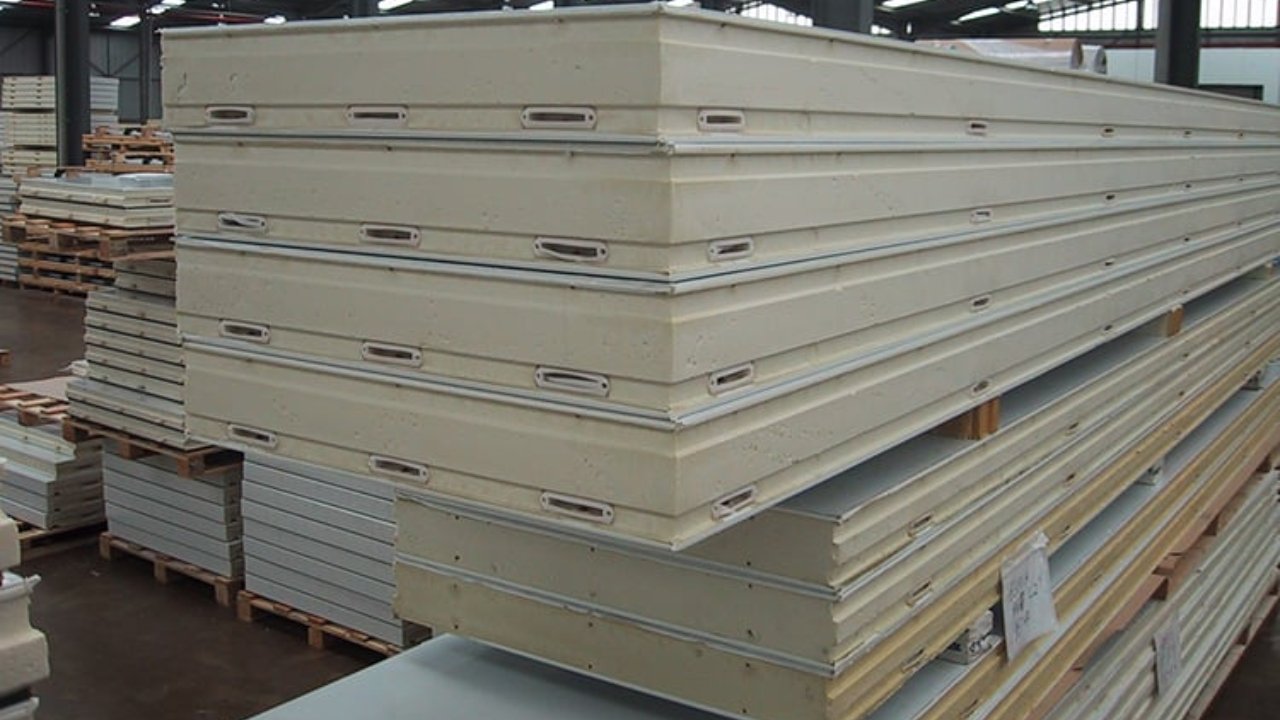
PIR sandwich panel uses polyisocyanurate foam as the core materials with the two side panels made from either galvanized steel, aluminum or stainless steel.
What is PU (Polyurethane) Sandwich Panel?

A PU (polyurethane) sandwich panel is a type of panel that uses polyurethane foam as an insulation core, which is sandwiched between metal sheets.
You can choose PU sandwich panels made from galvanized steel, stainless steel or aluminum.
Differences Between PU and PIR Sandwich Panel

Before you choose either PU sandwich panel or PIR sandwich panel, it is critical to understand the key differences between these two materials. It will help you decide whether to use these materials for warehouse, cold storage or any other modular building project.
Having said that, let’s dive right into it:
· Panel Composition
In any sandwich panels, one of the main distinguishing factor is the core material.
For PU sandwich panels, the core material is polyurethane foam while PIR sandwich panel’s core material is polyisocyanurate foam.
Well, both the polyurethane foam and polyisocyanurate foam have unique structural composition which contributes to the unique performance of these two core materials. For instance, they have different:
- Isocyanate ratio – PU sandwich panel has lower isocyanate ratio or content while PIR has higher isocyanate content.
- Chemical structure – PU has a simple chemical structure, while PIR has a highly cross-linked molecular structure that is more rigid.
· Fire Performance
Another critical variable to consider when choosing material for any construction project it the fire performance.
Let’s compare the two materials in the table below:
| Fire Properties | PU Sandwich Panels | PIR Sandwich Panels |
| Fire ignition point | · Low | · Higher |
| Structural integrity when subjected to fire | · As the sandwich panel core melts, it will tend to delaminate | · They have protective char layer, which acts as a protective layer. Therefore, it can maintain the shape and structure. |
| Fire rating | · It is combustible hence rated Class E or F | · It does not ignite easily hence rated Class B-s1, d0 or B-s2, d0 |
| Producing smoke during combustion | · Material produces high and dense smoke, which is generally dark | · Although it produces smoke, it is less dense compared to PUR |
| Charring | · Material melts and drips can spread fire at a lower rate | · During combustion, it forms a carbonaceous char layer that helps to protect inner core |
· Thermal Conductivity
PU has a thermal conductivity that ranges from ~0.022-0.024 W/m•k, while PIR has thermal conductivity which ranges from ~0.021 – 0.023 W/m•K. This means PIR has insulation that is slightly better compared to PU.
· Temperature Range
PU sandwich panels have a continuous operating temperature of approximately 40°C to +80°C, while with PIR it is from 50°C to +120°C. This means, the performance of PU degrades when temperatures are higher even as PIR maintains its structural integrity when exposed to high heat.
· Water Absorption
Another critical factor to evaluate when choosing sandwich panels for any construction project is water absorption.
PU sandwich panels have a closed-cell structure with PIR panels having a closed-cell with a tighter structure. Therefore, the PU has low water absorption with PIR having a lower water absorption.
At the same time, it is important to note that PU panels degrade faster if moisture penetrates over a period with PIR panels offering better long-term moisture resistance.
· Bulk Density
PU panels has typical density that ranges from 38 to 42 kg/m³ with PIR panels density ranging from 40 to 45 kg/m³.
· Lifespan
The expected lifespan for PU ranges from 20 to 25 years, with PIR on the other hand, having an expected lifespan of 25 to 30+ years.
· Insulation Properties
Even though PU sandwich panels have an excellent thermal insulation, PIR panels, on the other hand, have superior long-term insulation stability.
Also, PU panels are a bit more sensitive to aging as well as heat exposure with PIR having the ability to retain R-value better over a period.
· Cost
Initially, PU sandwich panels cost lower while PIR costs mostly 10 to 25% higher. Therefore, if you are looking for an affordable sandwich panel, then going for PU maybe a better option.
Whether to Choose PU Sandwich Panel or PIR Sandwich Panel

Although the key uses of PU sandwich panels and PIR sandwich panels may overlap, some of the key applications in different industries include:
| Key PU Sandwich Panel Applications | Key PIR Sandwich Panels Applications | |
| Examples of Applications | · Cold storage systems like walk-in freezers · Prefabricated homes · Temporary office structures · Agricultural buildings | · Warehouse and factory building construction · Date Centers · High rise building construction · Food processing plants |
| Factors Determining Applications | · Budget friendly construction structures · Fire rating B2/B3 | · Higher costs (Nearly 15% more expensive than PU) · Fire rated buildings (Class B1) |
FAQs
Can PIR replace PU sandwich panel?
Yes. You can have them replaced with PU sandwich panels in almost every application.
Between PU and PIR, which is a perfect choice for cold rooms?
Both of them are ideal for cold rooms. However, PU is perfect for budget-friendly cold storage and PIR is ideal for commercial cold rooms facilities.
Which sandwich panel is easier to cut between PIR and PU panels?
PU sandwich panels are quite easy to cut as compared to PIR panels. This is due to their foamy structure, which is soft.
Are there specific building codes for PIR and PU sandwich panels installation?
Yes. Different regions utilize fire regulations that are stricter to PU panels. PIR panels mostly meet fire reaction, insurance, and industrial and commercial buildings code standards.
Lutonpanel is your Trusted Sandwich Panel Manufacturer in China

Lutonpanel sandwich panels are specially engineered for durability, improved thermal insulation and better structural strength. Whether you are looking for PU sandwich panels or PIR sandwich panels, Lutonpanel offers 100% custom-made designs for all your construction projects.
Partner with us today for all your sandwich panels from China – Get your quote today.


